
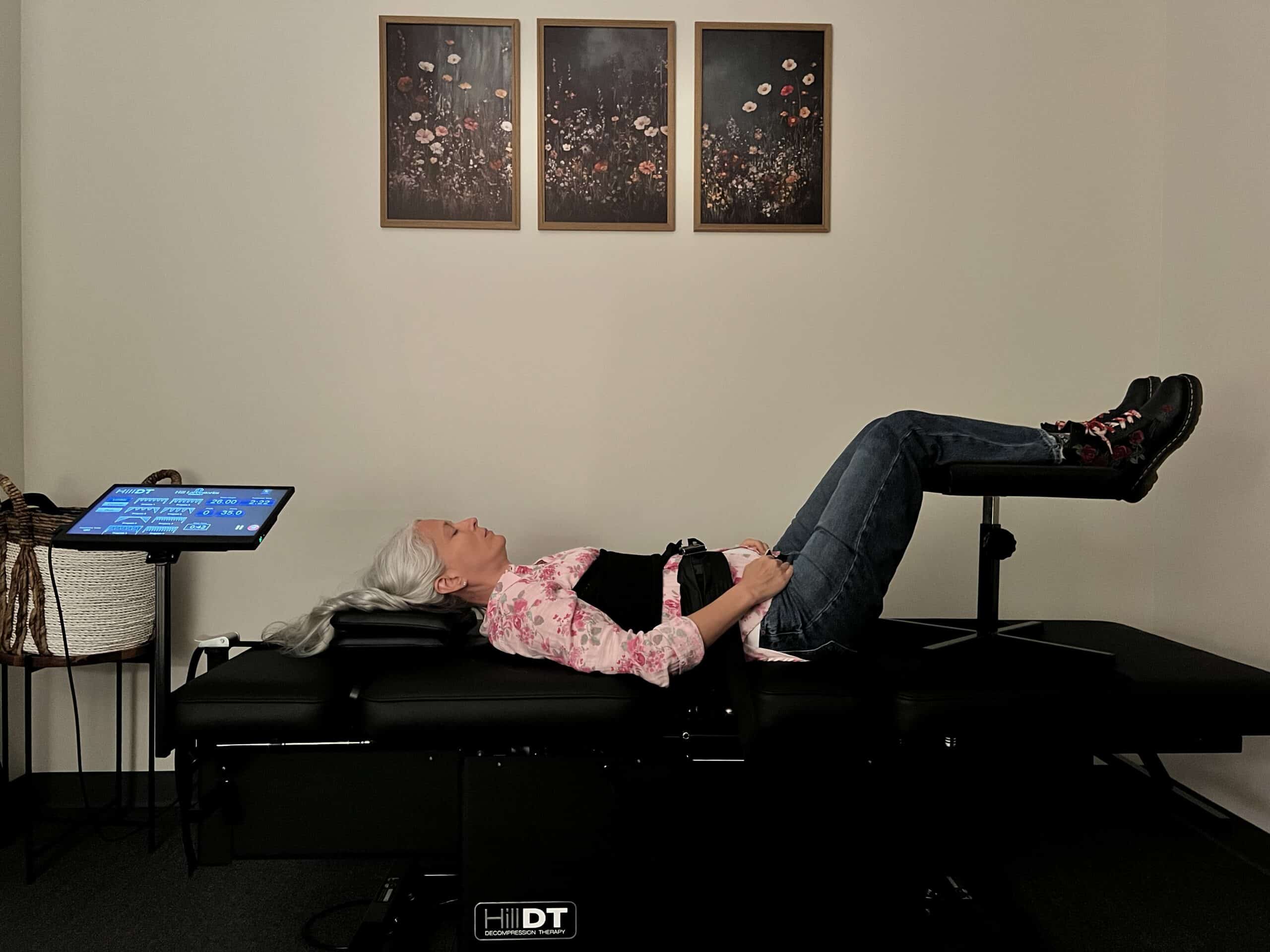
Spinal Decompression: The Solution for disc herniations, sciatica, and stenosis
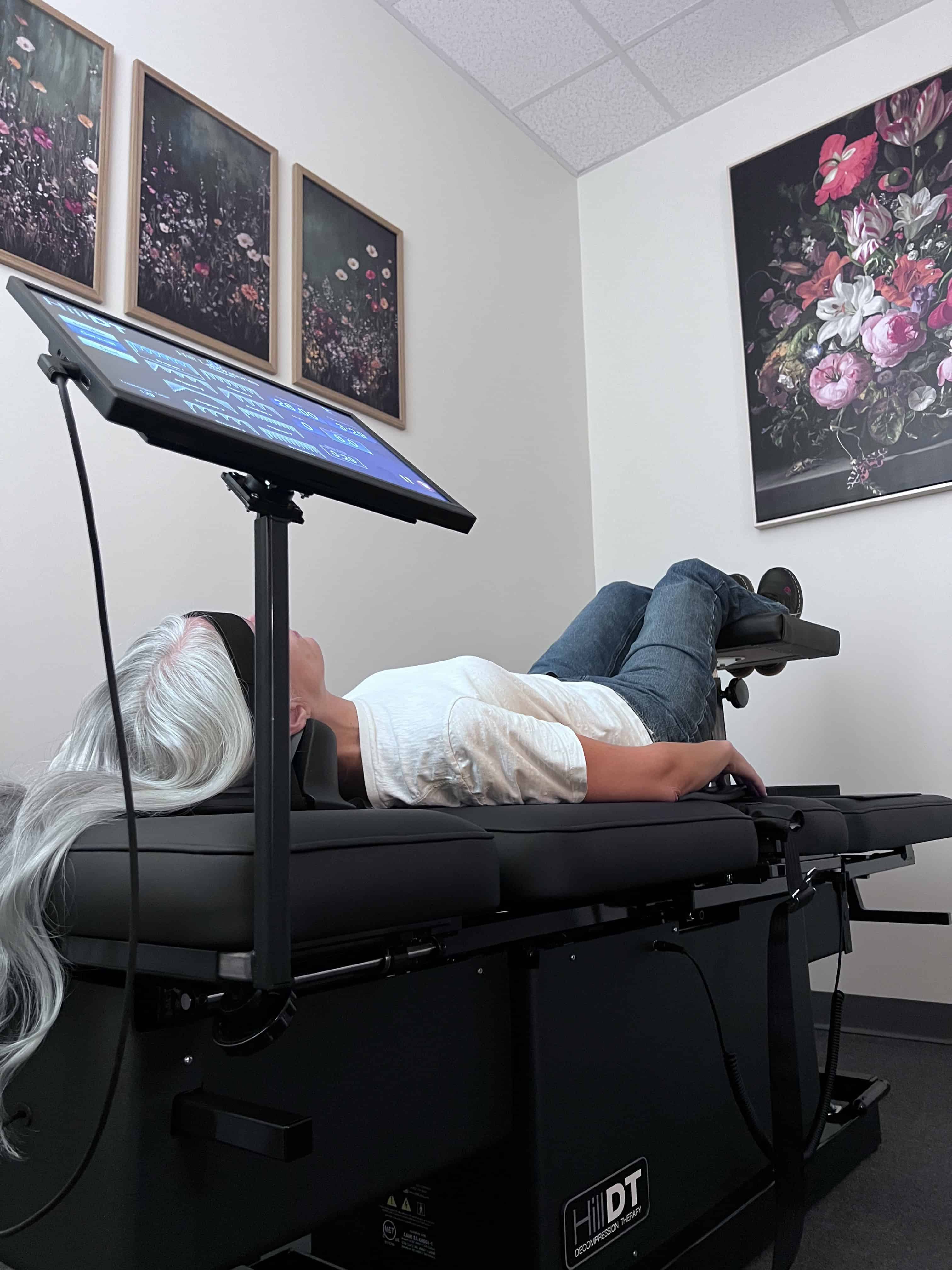
Stop the radiating pain and get back to normal life, normal sleep, and living without constantly thinking about the burning nerve pain in your leg or arm, and the back or neck pain that goes with it. We combine non-surgical spinal decompression with laser here in Spring Branch/Spring Valley to reduce the pressure on the nerves that are keeping you up at night.
You’re probably here because you have disc pain from a bulging or herniated disc, sciatica, or stenosis, and believe that surgery is your only answer. I’m here to tell you otherwise. You have options, and one of the most powerful tools in the toolbox for the chronic spine conditions listed above is spinal decompression.
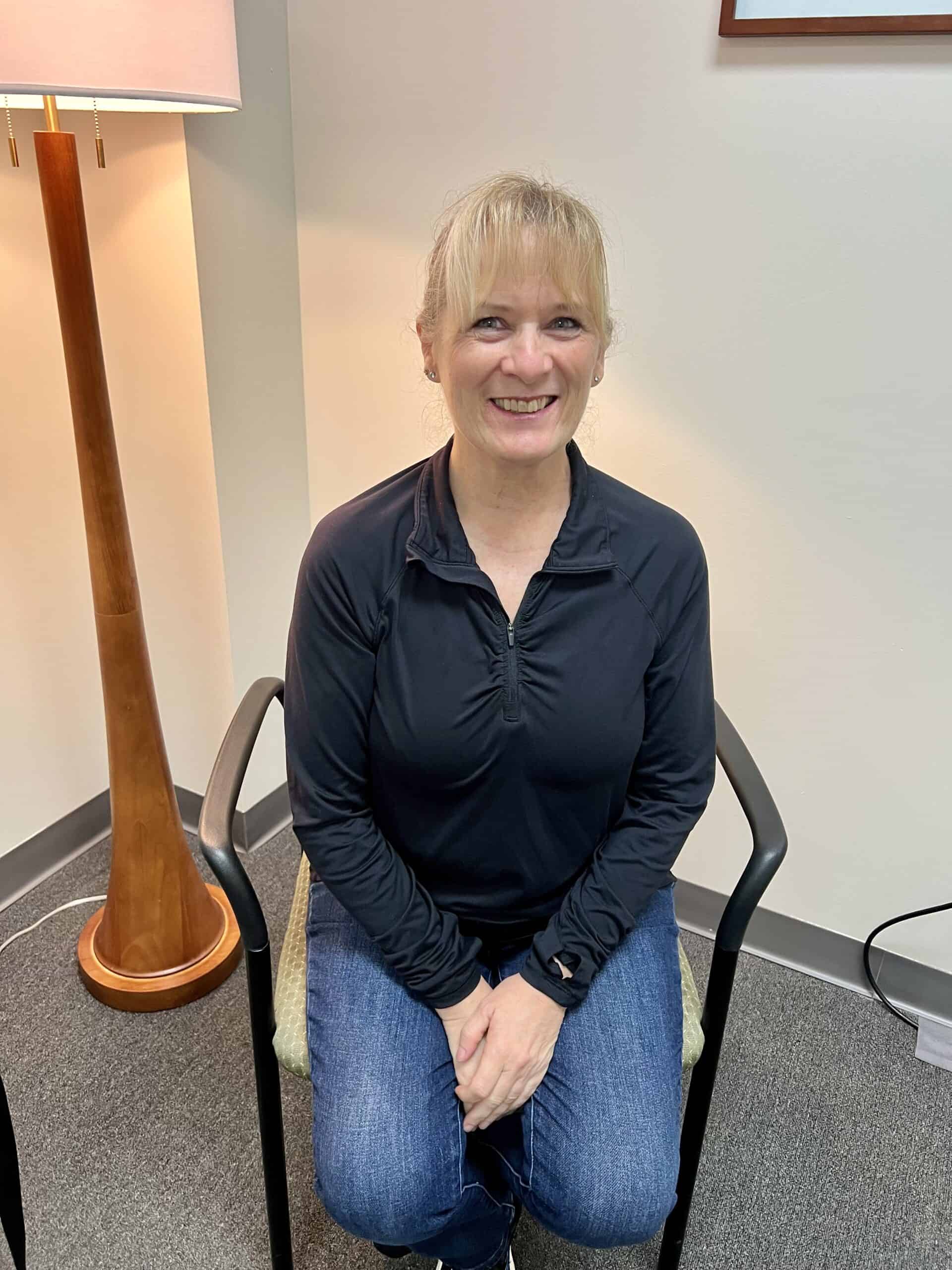
Cara was having debilitating shoulder pain and had gone through two PRP (platelet-rich plasma) injections in her rotator cuff that gave her no relief. As it turns out, her shoulder pain was from nerve irritation that began in her neck from a bulging disc. She had no discernible neck pain, so the shoulder doc missed it. She had a positive MRI finding for cervical disc and positive nerve tension tests for her arm, so we started decompression. After the second session, she was already sleeping better—poor sleep is very common when symptoms come from the disc, because discs absorb water when the person is non-weight-bearing at night. A disc will often be at its “bulgiest” late at night and first thing in the morning. Cara’s shoulder pain has resolved to better than 90% from when we started decompression.
Spinal decompression has been shown to help with the following conditions, all without surgery:
- Pinched Nerves
- Chronic Neck Pain
- Chronic Back Pain
- Posterior Facet Syndrome (wear and tear on posterior joints)
- Bulging / Herniated Disc (Slipped Disc)
- Sciatica
- Numbness and/or Tingling in Arms and/or Legs
- Spinal Stenosis / Arthritis
- Spinal Strains
- Degenerative Disc Disease
- Spondylosis (Spinal Degeneration)
How We Get Started
To keep things fully compliant with insurance and, more importantly, to ensure you are actually a candidate for decompression, we start with a thorough clinical evaluation. (Because charging for initial exams is standard medical practice, our standard exam fees apply).
We don’t guess, and we don’t treat blindly. If our testing and your history show that a disc is truly the root of your pain, we will invite you back for a complimentary trial session on the decompression table so you can experience the relief for yourself before committing to a full care plan.
If our exam reveals that your pain is coming from a different source—meaning decompression won’t help you—we will tell you straight up and point you toward the right provider. No wasted time, no wasted money.
How Spinal Decompression Works
Many of the problems associated with chronic spine pain come from the loss of disc height that comes with the aging process or acute disc injury. The textbook cause of sciatica is disc material protruding from a herniation or bulge that pierces the disc’s cartilaginous outer wall and enters the space where nerves exit the spine.
The result is a burning, tingling, pulling, or electrical-shock sensation down the leg associated with sciatica (also, the femoral nerve runs down the front of the thigh, but the cause is the same), as well as arm pain originating from the discs in the neck.
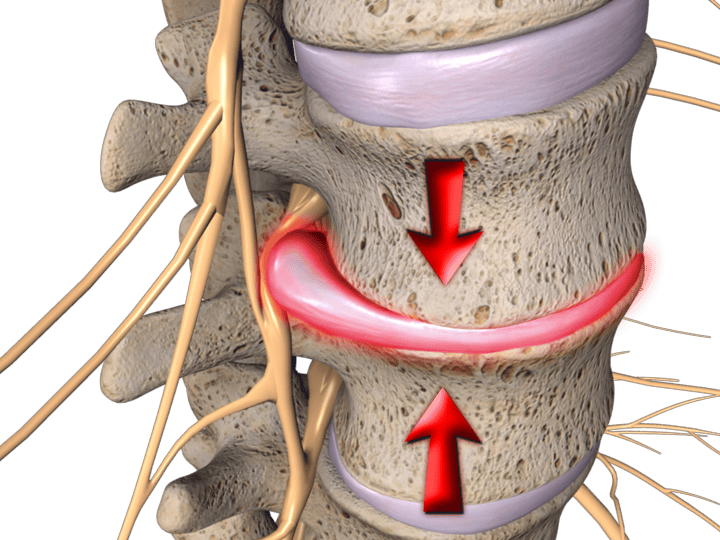
Spinal decompression works by slowly and gently creating a negative pressure in the disc, creating a vacuum effect that helps suck in a bulge, rehydrate degenerated discs, and give those tissues new life. To do that, we have one more enemy: your own defense mechanism of muscle guarding.
The reason mechanical traction doesn’t usually work is that sudden, more extreme traction forces trigger a guarding mechanism in the muscles, which can increase intradiscal pressure. That’s because when a muscle contracts, it shortens. That’s why things like inversion tables rarely work for sciatica–you go upside down and the muscles guard, which increases the pressure on the disc, and then you’re hanging upside down, in pain, with too much blood rushing into your head. Not good.
Our decompression table takes its time reaching negative disc pressure. The treatment sessions typically last over 20 minutes, and the table features sensors that detect muscle guarding, allowing it to respond by reducing tension and waiting for the muscles to relax. Once you get to negative pressure in the disc, it will only hold you there for a few minutes before ending the session.
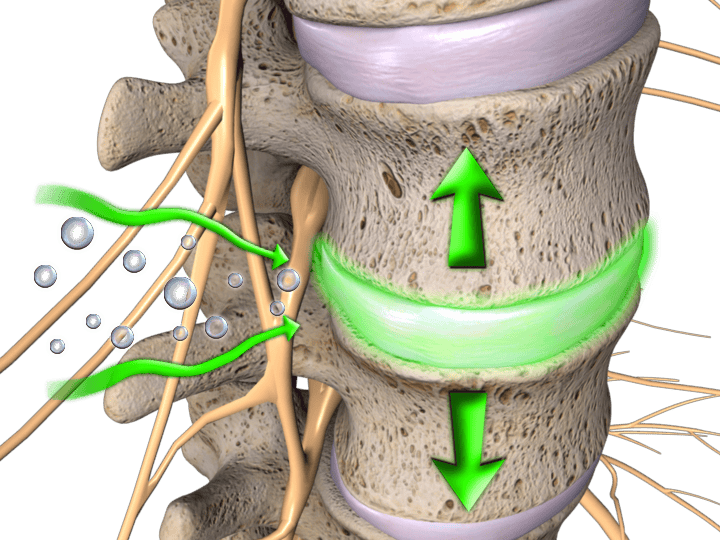
There’s a delicate balance between “just right” and “too much.” Obviously, we shoot for the former. The inherent issue with treating disc herniations is that the same tissue causing the nerve symptoms is also likely to be inflamed and irritated. Pulling and stretching too long or too hard can be counterproductive. The goal is to get in, create negative disc pressure for a few minutes, and then get out.
This process is just that: a process. We’re in an easy-to-find location in Spring Branch/Spring Valley; a convenient location from almost anywhere in Houston. The number of sessions required is variable, but we can make predictions if we have enough information to work with, namely, imaging. And when it comes to imaging, the MRI reigns supreme. X-rays are helpful, but they don’t show the disc material. You can see the loss of height in a disc that develops after an injury, but you can’t see or measure a herniation, or whether it’s acute or an older injury that has already healed.
Other predictive factors include how far down an extremity the nerve pain extends — the further down, the more sessions needed, as a general rule. The length of time you’ve had the problem can be a predictive factor, but not always. Sometimes, trying something new can make a difference faster than you think.
Step One: Is it Disc, or Something Else?
However, the first step, before committing to anything, is to get a solid exam. That’s where I come in. Over the years, I’ve had many patients who came in thinking they had sciatica, but didn’t. These patients had already visited an orthopedist and had an MRI in hand, showing a disc bulge. But once we tested everything in the clinic, it became apparent that the patient in question was having referred pain from another tissue. In these situations, decompression is not the answer.
You are not your MRI. Look up the probability of an asymptomatic disc bulge for your age and gender. It’ll only take a quick Google search to show you why a thorough exam is so necessary to getting results.
Discs Can Heal
There’s a lot more to learn about how discs heal. But the most important thing to understand is that they can. Sometimes, what you avoid doing is as important as what you do. Many of the stretches people instinctively do can make the problem worse, but the same stretches often provide temporary relief. Getting you off that hamster wheel is one of the most critical parts of the process, and we’ll do that on day one.
I should also mention that the primary driver of the back pain piece of the disc pain journey is inflammation. So it’s not all the mechanical pressure of the disc compressing nerve tissue. There is also research showing that many patients with sciatica don’t have disc material touching nerve tissue at all; rather, the inflammatory cascade that begins with the herniation sensitizes the nerve root, causing the familiar tingle/burn down the leg or arm.
To combat the inflammatory problem and to expedite healing in general, we couple Class IV Laser therapy with decompression to address all the potential pain generators with each session.
Still not sure? Let’s review the other options available, mainly, shots, pills, and surgery.
Standard Medical Interventions for Disc Injury
Here’s the progression I observe every day: a patient visits an orthopedist with sciatica or stenosis. The doctor orders an MRI, which reveals one or more bulging discs. The doctor orders a short course of oral steroids and says that if that doesn’t help, the next step is to try steroid injections around the disc.
Sometimes, the medication or shots provide temporary relief. But it’s always temporary. On occasion, a disc will heal while the symptoms are under control with medication, and when the medication wears off, you return to normal. Sometimes.
But the research shows otherwise. The most common form of spinal injection for back pain is known as an Epidural steroid Injection (ESI). The Journal of the American Medical Association (JAMA) advises physicians to refrain from recommending this therapy. One study shows that injections in women over 65 increase the risk of a vertebral compression fracture by 21%. So, even if the shot helps with disc pain, you could be trading one problem for another.
The reality is that steroids are catabolic to connective tissue and can lead to long-term damage to tendons and ligaments. Not good for long-term stability.
I’ve also seen steroid injections flare people up in ways nobody expected. One patient of mine was almost done with care for a chronic disc injury and was finally approved by his insurance for an injection. He was 90% better already, but decided to get the injection because he was going on vacation and hoped the shot would knock out the last 10%. Instead, his pain ramped up in intensity, and he missed his vacation and eventually had surgery. He’s now had a second surgery.
Speaking of surgery, let’s look at the numbers for hot lights and cold steel. First off, the stats for a second surgery after disc herniation repair range from 8.5% to 24%. And that’s just the people who try again instead of living with their initial results. A 2023 meta-analysis (a study of studies) showed that the prevalence of persistent pain after surgery was 14.97%.
The truth is, once they cut you, you’re never quite the same. I’m not saying surgery is never called for or helpful. But I am saying it should be the last resort, not the first response.
To be fair, surgery is not the first option, even for the surgeons who perform the operations. Their general first attempt at management is a referral to PT and the steroids above, and often, another drug called gabapentin.
Gabapentin, a drug specifically for nerve pain, sometimes helps for a while with sciatica. I’ve seen it take the edge off the pain for some patients who came to me looking for a nonsurgical option. But this study (another meta-analysis) states in the conclusion, “This SR provides clear evidence for the lack of effectiveness of pregabalin and gabapentin for sciatica pain management. In view of this, its routine clinical use cannot be supported.”
The final pills in the arsenal are for pain, but at this point, getting anything strong enough to work is virtually impossible. Doctors don’t want the risk of prescribing strong opiates. Therefore, the most commonly prescribed pain drug is a drug called Tramadol, which is technically an opiate but is less addictive. But it’s also less powerful, and in my daily conversations with people who are actively taking it, it’s just not very helpful.
And even if it were effective at masking the pain, you’d still have the disc pathology happening. And eventually, even if you’re not feeling the pain, if the motor nerves are affected, the muscles they control will become weak. Sometimes permanently.
I know that was a lot. But I like to be thorough in both my writing and in how I treat patients with these problems. Come see us, and I’ll do a comprehensive exam. If you qualify for decompression, we’ll do a trial session so that you can experience it for yourself.
Doc G.